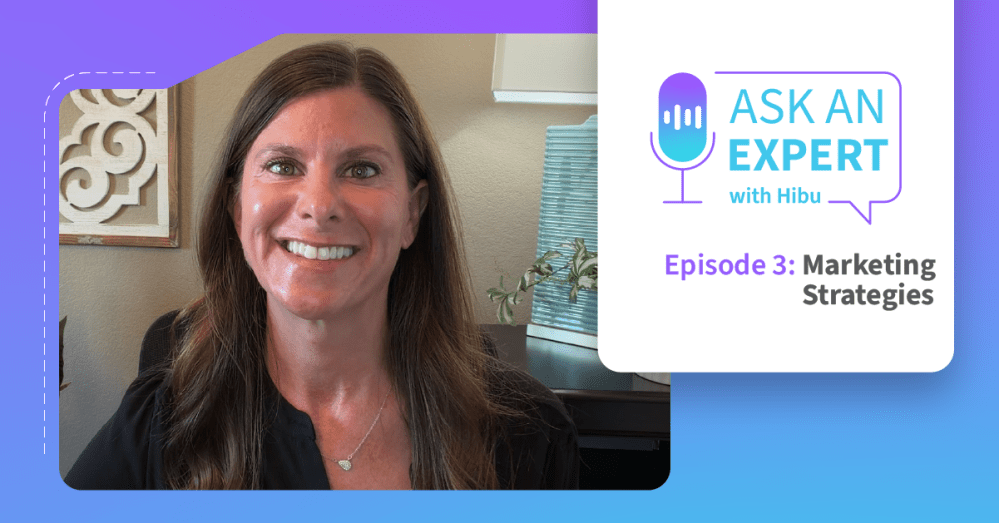
You have questions about making your marketing work harder for your local business, and our experts have the answers. Join Hibu’s Chief Marketing Officer, Jenn Bergner, as she shares her expertise on how local businesses can measure marketing success, generate better leads, and build strategies that support long-term growth.
On this episode of Ask An Expert With Hibu, we asked our CMO, Jenn, what local business owners should know about getting the most out of their marketing. She breaks down why lead quality matters just as much as lead volume, how different marketing channels work together to attract and convert customers, and which metrics businesses should focus on to understand their marketing ROI.
Jenn also shares how Hibu combines marketing strategy, technology, and hands-on experience to help local businesses make smarter marketing decisions and drive sustainable growth.
Check out the full video below!
And if you like this video, make sure to check out the other videos in our Ask An Expert With Hibu series:
Episode 1: Chief Product Officer Nick Hopkins Talks Paid Ads
Episode 2: Chief Human Resources Officer Angie Corcoran Talks Company Culture
[Transcript]
Jenn Bergner
Jenn 00:05
Hi everyone, I'm Jen Bergner, Chief Marketing Officer at Hibu. I've spent my career in growth marketing, and one thing I've always been passionate about is understanding what actually drives results. Today, we're talking about how local businesses can get more out of their marketing, not just by measuring what's working, but by understanding how different marketing strategies work together to generate better leads and drive sustainable growth.
Let’s jump in.
[On-Screen Question: When it comes to marketing, what does success really look like for a local business?] 00:28
Jenn 00:37
When I think about successful marketing, I always start with the business outcome we're trying to achieve. For most local businesses, that means generating a consistent flow of high-quality leads that turn into customers at a cost that makes sense for the business. And there are really three things I think about: volume, quality, and cost. Are you getting enough leads? Are they the right kind of leads (people who actually need your service)? And are you acquiring them efficiently enough to grow profitably? A lot of marketing reports focus on things like impressions, clicks, or website traffic. Those are useful indicators, but they're not the end goal.
You can have thousands of website visitors, but if none of them become customers, that's probably not delivering the business results you need. So, my advice is to always start with the outcome. Define what success looks like for your business, and then work backwards to understand how your marketing is contributing to it.
[On-Screen Question: What’s the biggest mistake businesses make when evaluating their marketing performance?] 01:29
Jenn 01:38
One of the biggest mistakes I see is evaluating every marketing tactic based on only the immediate leads or sales it generates, and I understand why. If you're investing money in marketing, you want to see a return. I do too. But here's the challenge. Not every marketing strategy is designed to produce an immediate lead. Some activities are about introducing your business to new customers. Others are about building trust or helping someone decide whether you're the right choice. And then there are strategies focused on converting someone who's ready to buy. If you only measure the last step, you're missing a big part of what helped create that opportunity in the first place. That's why I think it's important to understand not just which tactics are generating leads, but how your overall marketing strategy is contributing to those results.
[On-Screen Question: Why isn’t generating more leads always the same as getting better results?] 02:24
Jenn 02:33
More leads can absolutely be a good thing, but more isn't always better if they're not the right leads. Let's say you're a roofing contractor and your marketing generates 100 leads, but most of those people are outside your service area or looking for work you don't offer.
Now imagine another campaign generates 50 leads, but they're homeowners in your market who need the service you actually want to sell. That second campaign could be significantly more valuable, even though the lead volume is lower. That's why I always look at lead volume, lead quality, and cost together. And ideally, you want to take it one step further and understand which leads actually became customers. Because the goal isn't just to make the phone ring, it is to make the phone ring with the right opportunities and to do it at a cost that helps your business grow.
[On-Screen Question: What do you mean by a full-funnel marketing strategy, and why does it matter?] 03:22
Jenn 03:31
A full-funnel marketing strategy is really about understanding that customers go through different stages before deciding to do business with you. At the top of the funnel, you're building awareness. You're introducing your business to people who might need your service in the future.
In the middle, you're building trust and consideration. Maybe someone visits your website, reads your reviews, or compares you with another provider.
At the bottom, you're focused on conversion, turning that interest into a phone call, an appointment, or a request for quote. Each stage has a different job, and each contributes to the end result. Here's the important part: those stages aren't independent. They influence each other. The awareness you build today can create the leads you generate next month or even next year. So, a strong marketing strategy doesn't just focus on one stage; it connects all of them. Helping people move from discovering your business to ultimately becoming customers.
[On-Screen Question: Why can’t a business just focus its marketing budget on people who are ready to buy?] 04:25
Jenn 03:33
This is probably one of the most important concepts I want business owners to understand. When someone is actively searching for a service you offer, that's an incredibly valuable opportunity. If someone's air conditioner breaks in the middle of summer and they're searching for an HVAC company, you absolutely want to be there.
But here's the thing. There's only a certain number of people actively searching for your services at any given time. If you only focus on capturing those people, you're competing for a limited pool of existing demand, and eventually that can limit your growth. You also need to be building awareness with people who aren't ready to buy yet, so when they do need your services, your business is already familiar to them.
Think about it this way. Bottom-of-funnel marketing helps you capture demand. Top in middle of funnel marketing help you build the demand and preference that fuel future leads. You need both. And that doesn't mean splitting your budget equally across every stage. It means being intentional about creating a healthy pipeline of future customers, while continuing to convert the ones who are ready today. That's how you build something sustainable rather than constantly chasing the next lead.
[On-Screen Question: How do different marketing channels work together to generate leads?] 05:40
Jenn 05:49
I think one of the easiest ways to understand how marketing channels work together is to think about how you personally make buying decisions.
Let's say you're looking for an attorney to help with an estate plan. Maybe you've seen a local law firm’s content on social media or come across an article they shared about estate planning. A few weeks later, when you're ready to take the next step, you search online, visit a couple law firm websites, and read the reviews. Then you finally contact one of those firms to schedule a consultation. Now, if we only look at that final interaction, we might say that Google search generated that lead. And search certainly played an important role. But what about the content that introduced you to the firm, or the reviews that gave you confidence to reach out? Those interactions helped influence your decision, even if they weren't the final step. That's why marketing works best when your channels reinforce one another; your advertising, website, online presence, reviews, and other marketing activities should all be working together to help move customers towards choosing your business.
[On-Screen Question: How should a local business decide where to invest its marketing budget?] 06:50
Jenn 06:58
I would always start with what the business is trying to accomplish. Are you a new business that needs to build awareness? Are you established and looking to generate more leads? Are you trying to grow a particular service line or reach a new geographic market? Those goals should influence where you invest.
You also need to understand your customers. How do they find businesses like yours? How long does it typically take them to make a decision? And how competitive is your market? The right marketing mix for an emergency plumbing service may look very different from the right mix for a kitchen remodeling company. One is often responding to an immediate need. The other may involve weeks or months of research and consideration.
And I'd emphasize that a balanced marketing mix doesn't mean spending the same amount everywhere. It means making smart investments across the strategies that support your goals, and then adjusting that mix as you learn what's working. There's no universal formula. The right answer depends on your business.
[On-Screen Question: What marketing metrics should local business owners actually pay attention to?]
Jenn 08:03
If I were a local business owner, I'd focus on a handful of metrics that connect directly to business results.
First, how many leads am I generating? That includes calls, form submissions, appointment requests, and other meaningful inquiries. Second, how many of those leads are qualified? Are they coming from people who are actually interested in the services I provide? Third, what's my cost per lead? How much am I investing to generate those opportunities? And then, if you can, track how many of those leads became customers, because that's where you really start to understand the return on your marketing investment.
Now there are plenty of other metrics that matter. Website traffic, ad engagement, search visibility, and conversion rates can all help explain what's happening. But I think it's important to distinguish between the metrics that tell you how your marketing is performing and the ones that tell you what is delivering for your business. You need both, but the business outcomes should always guide the conversation.
[On-Screen Question: How can a business tell what’s working when customers interact with multiple marketing channels?] 09:02
Jenn 09:11
This is where marketing measurement gets a little more complicated. Customers rarely follow a perfectly straight path from seeing an ad to becoming a customer. They might discover you in one place, research you somewhere else, and finally contact you through a completely different channel. So, if you're only looking at which channel generated the final click or phone call, you're not necessarily seeing the whole picture.
That's why I encourage businesses to look at overall marketing performance, not just individual channels in isolation. Are total qualified leads increasing? Is your cost per lead improving? Are you converting more opportunities into customers? And when you make changes to your marketing mix, what happens to those results over time? You may not be able to attribute every single lead perfectly, and that's okay. The goal is to have enough visibility to understand what's contributing to growth and make better decisions about where to invest.
[On-Screen Question: Once a business understands its marketing results, what should it do with that information?] 10:06
Jenn 10:14
For me, measurement is only valuable if you're actually using it to make your marketing better. And that's really the foundation of growth marketing. You look at the results, develop a hypothesis about what could improve, make an adjustment, and then measure what happens.
Maybe you're getting plenty of leads, but they're not the right fit. That might mean adjusting your targeting or messaging. Maybe people are visiting your website but not contacting you. That could point to an opportunity to improve website experience or make it easier for them to take action. Or maybe your conversion-focused campaigns are performing well, but you've reached a point where you can't generate much more volume efficiently. That might tell you it's time to invest more in building awareness and future demand.
The important thing is that marketing shouldn't be something you set up once and forget about. Your customers change, your competitors change, your business priorities change. The businesses that gets the most out of marketing are the ones that continue learning, testing, and optimizing.
[On-Screen Question: What’s the one thing you’d want every local business owner to remember about marketing and growth?] 11:11
Jenn 11:19
If there's one thing I'd want business owners to take away, it's that great marketing isn't about finding one magic channel or one campaign that generates all your leads. It's about building a system where all the pieces work together. You need to reach new potential customers, build trust, convert interest into leads, and continue improving the quality and efficiency of those leads over time.
And I also want business owners to know that they don't have to become marketing experts to do this successfully. Marketing is complex. Understanding the right mix of strategies, managing different channels, interpreting the data, and continuously optimizing performance takes time and expertise.
That's really why companies like Hibu exist. We bring the marketing strategy, technology, and hands on expertise together so business owners don't have to manage all of those moving pieces themselves. They can focus on what they do best, running their business and taking care of their customers well. While we focus on helping them generate the leads that they need to grow. Because at the end of the day, that's what successful marketing should deliver. More of the right opportunities, at the right cost, consistently over time.
Jenn 12:28
Thanks for joining me for this episode of Ask an Expert with Hibu. I hope this gave you a few new ways to think about your marketing, and how all the pieces work together to drive growth. And if you'd like to learn more about how Hibu helps local businesses generate leads and grow, visit us at Hibu.com.